Mozambique Channel · Southern Africa

Where the Zambezi
Meets the Sea

One of Africa's last great wilderness frontiers — a watery kingdom where giants wade at dusk, ancient trees touch the clouds, and rare birds skim moonlit channels.

Discover
"The Zambezi Delta spans over 12,000 square kilometres of braided channels, seasonally flooded plains, and ancient mangrove forests — a living mosaic that has remained largely unchanged for thousands of years."
12,000+
Square kilometres
1,000+
Elephants in the park
100,000 ha
Mangrove forest
2,650 km
Length of the river
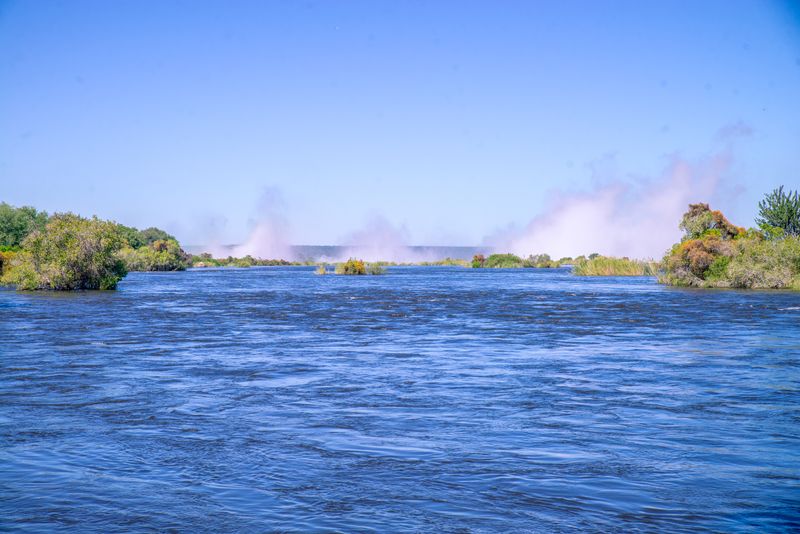
Zambezi River with mist and greenery
The Zambezi River
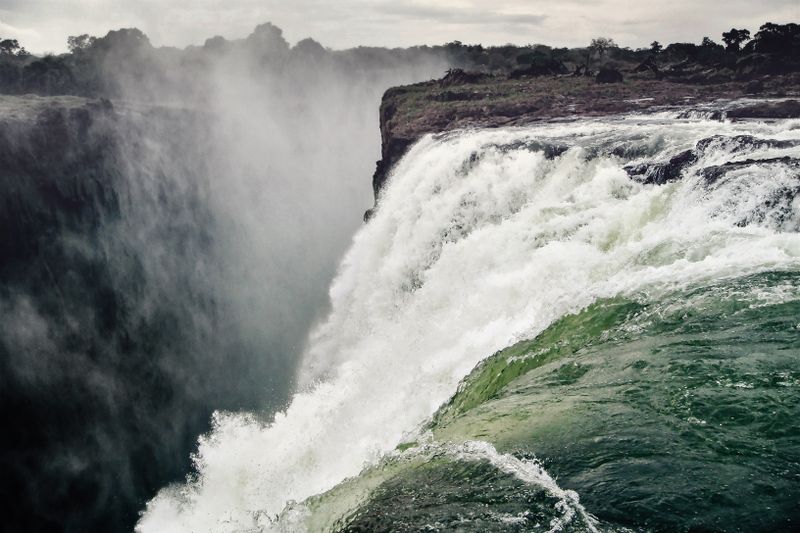
Victoria Falls on the Zambezi
Victoria Falls
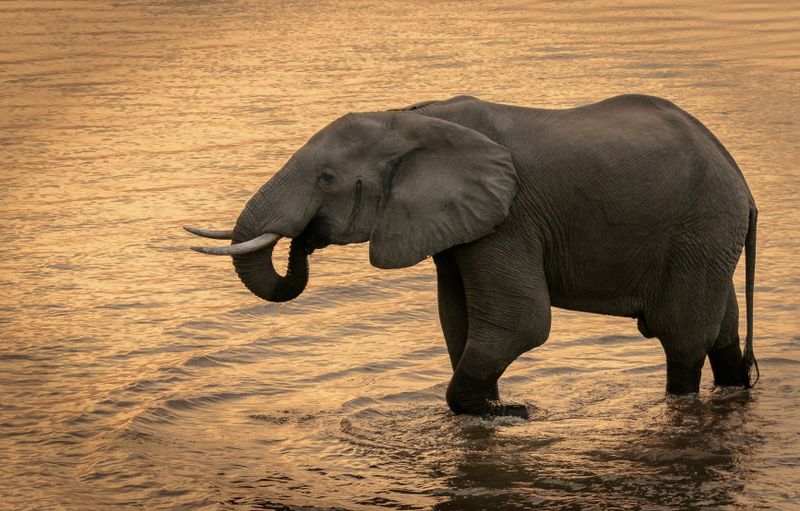
Elephant at the Zambezi River at sunset
Elephant at sunset · Zambia

Fauna

Iconic Animals of the Delta

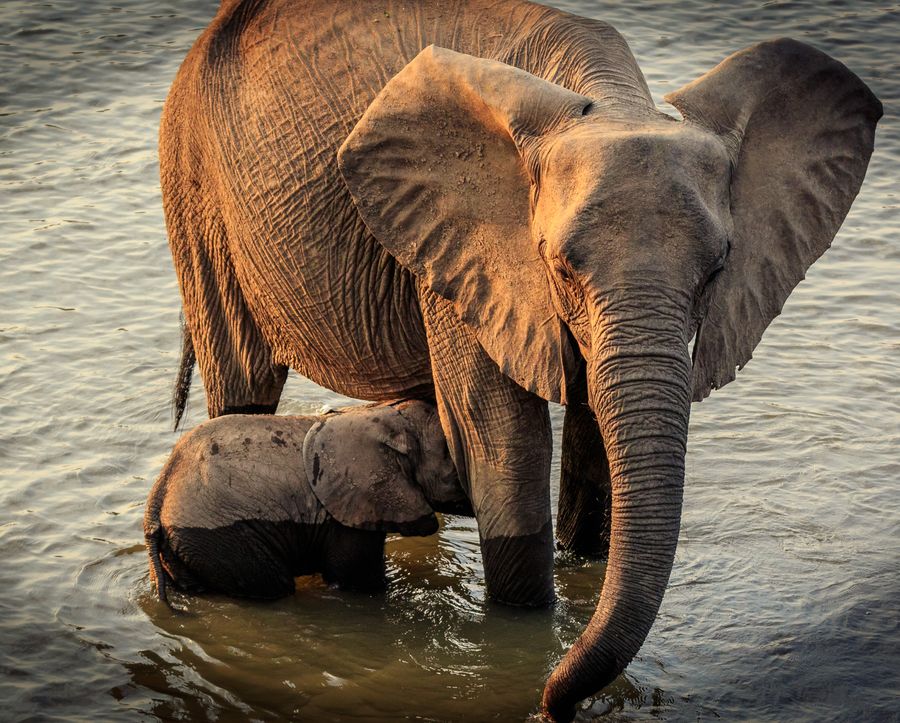
Mother elephant with calf at the Zambezi River
🐘

African Elephant

Loxodonta africana — The Delta's Giant

The Zambezi National Park is home to over 1,000 elephants. These remarkably intelligent creatures use their tusks — modified incisor teeth — to tear bark from trees for food. Their enormous ears act like a built-in cooling system, fanning blood vessels to regulate body temperature in the humid floodplain climate.

1,000+ in the national park Tusks are modified teeth Ears regulate temperature
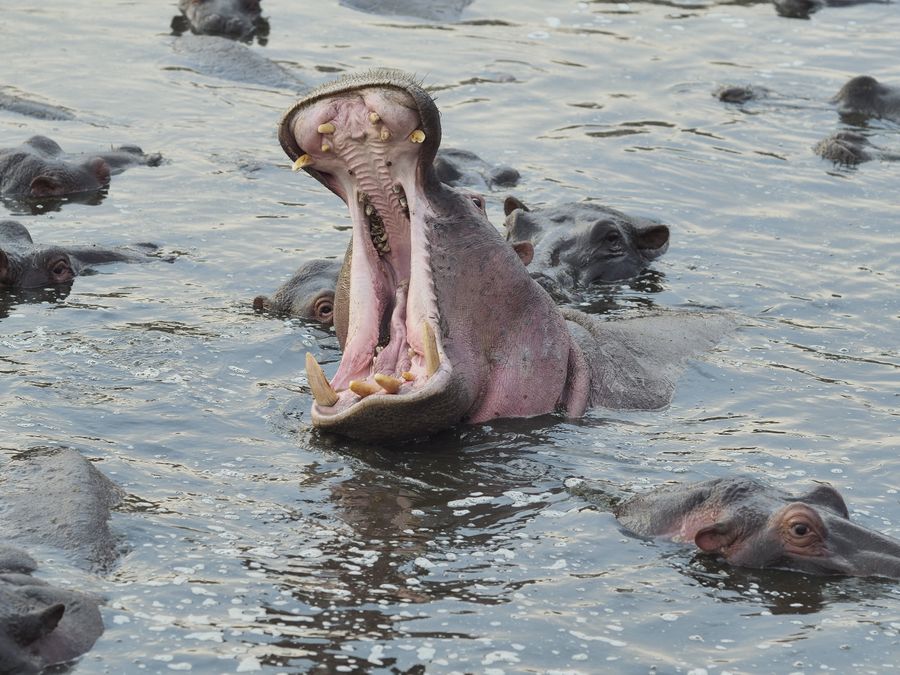
Hippopotamus with mouth open in water
🦛

Common Hippopotamus

Hippopotamus amphibius — The Semi-Aquatic Engineer

A single hippo can consume up to 40 kilograms of grass in one night — nearly 90 lbs. Yet they are far more than voracious grazers. Their waste acts as a natural fertiliser, feeding aquatic plants and supporting the entire food chain of the delta from the bottom up.

40 kg of grass per night Natural ecosystem fertiliser Vital to the food chain
Nile crocodile resting on a muddy river bank
🐊

Nile Crocodile

Crocodylus niloticus — The Ancient Predator

These "living fossils" can weigh up to a full tonne and live for 100 years — some individuals in the Zambezi may predate modern maps of Africa. A specialised third membrane covers their eyes underwater, allowing them to track prey with crystal clarity while completely submerged.

Up to 1,000 kg Lifespan: 100 years Third eyelid membrane
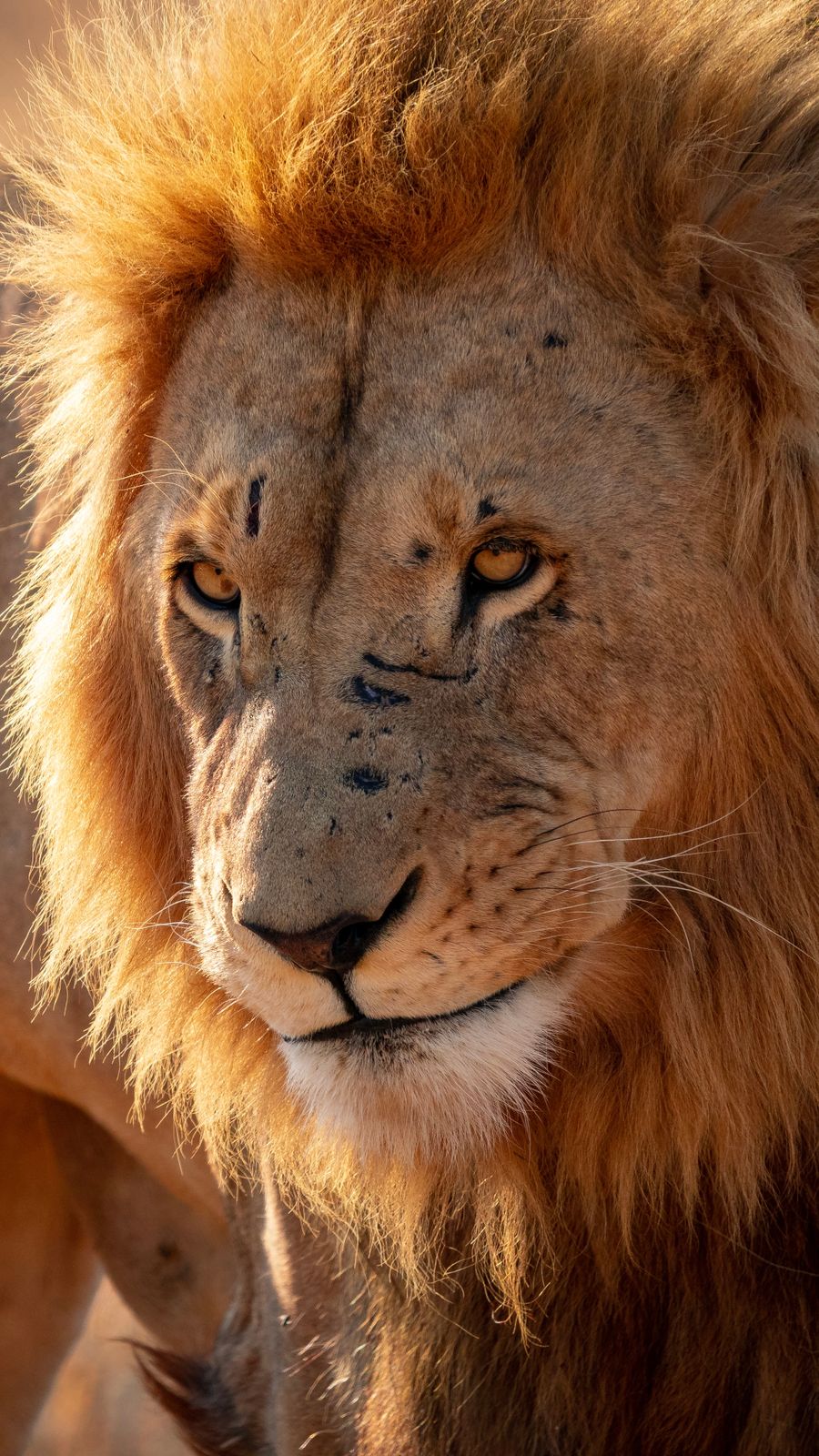
Close-up portrait of an African lion
🦁

African Lion

Panthera leo — The Night Hunter

A lion's roar is so powerful it carries 8 kilometres across the open floodplain — a sound that marks territory, warns rivals, and rallies the pride. Their night vision is six times more sensitive to light than a human's, giving them an overwhelming advantage in the darkness that falls over the delta.

Roar travels 8 km Night vision 6× sharper Apex nocturnal predator
African Skimmer bird showing its distinctive long lower bill, resting on a riverbank
🐦

African Skimmer

Rynchops flavirostris — The Unique Fisher

Among the most distinctive birds in Africa, the skimmer has a lower bill longer than its upper — a feature unique in the entire bird world. It hunts by flying just millimetres above the river, lower mandible cutting through the surface. The instant it touches a fish, the bill snaps shut.

Lower bill longer than upper Hunts by skimming surface Rare delta resident

Flora

Lush Delta Plants

Papyrus plant with feathery umbrella-like flower heads in sunlight
Sedge

Papyrus

Cyperus papyrus — The Ancient Paper Plant

The Zambezi Delta contains some of the most extensive papyrus swamps in East Africa. This extraordinary herb grows up to 9 metres tall, forming floating islands that shelter fish, birds, and amphibians alike.

📜Ancient Egyptians made the world's first paper from papyrus stems — our very word "paper" descends from its Greek name.
🐟The papyrus floating islands are nurseries for juvenile fish, providing vital shelter from larger predators in the open river.
🌡️A single hectare of papyrus swamp can filter up to 1,000 litres of water per day, acting as a natural purification system for the delta.
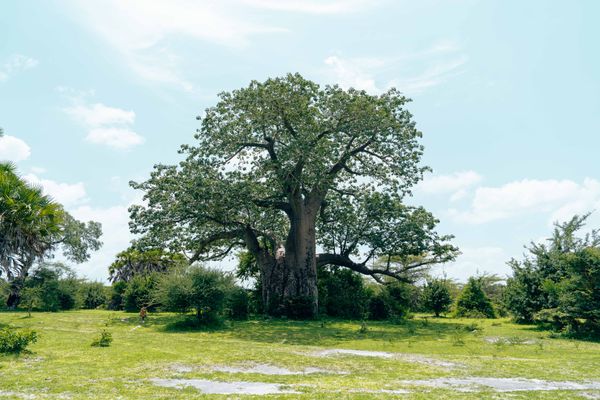
Baobab tree in an African safari landscape
Tree

Baobab

Adansonia digitata — The "Big Tree"

The famous baobab near Victoria Falls is an ancient specimen woven deeply into African myth. Called the "upside-down tree," its bare branches in the dry season look uncannily like roots stretching into the sky.

🌳Baobabs can live beyond 1,000 years and store thousands of litres of water inside their vast swollen trunks during drought.
🦇Baobab flowers only open at night and are pollinated exclusively by fruit bats, making the tree entirely dependent on bats for reproduction.
🍋The fruit is a superfood — packed with vitamin C at six times the concentration of an orange — and has been eaten by delta communities for millennia.
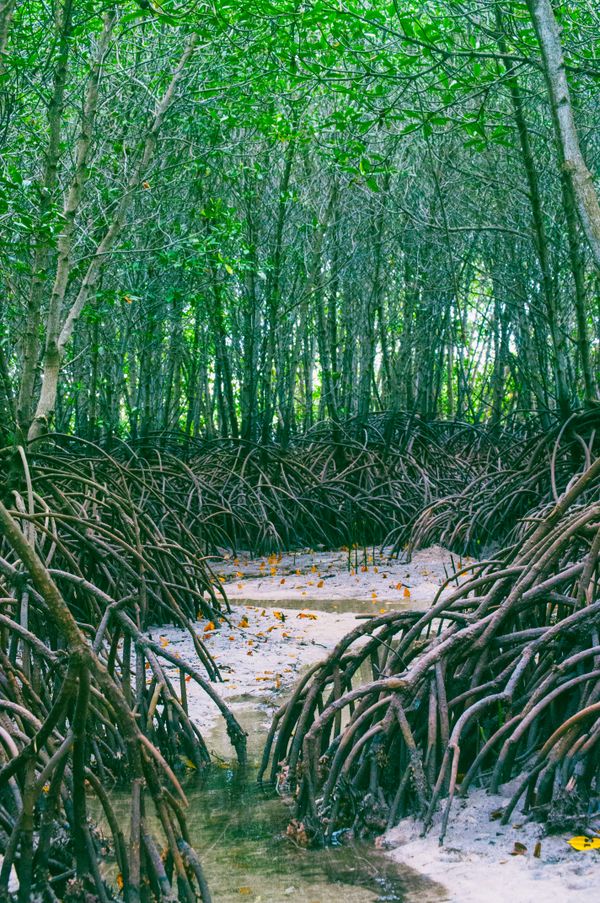
Dense mangrove forest with arching roots
Coastal Forest

Mangroves

Rhizophora mucronata — Coastal Guardians

The delta hosts the largest continuous mangrove stand in East Africa — 100,000 hectares of interlocked roots that buffer the coastline from cyclones, trap sediment, and serve as nurseries for countless marine species.

🌊At up to 30 metres, the delta's mangroves are among the tallest in the world, forming a living wall against flooding and coastal erosion.
🦀The root systems trap organic matter and support entire food webs — from microscopic algae to crabs, fish, and the birds and crocodiles that hunt them.
🌿Mangroves absorb up to four times more carbon than tropical rainforests, making the delta a vital carbon sink in the fight against climate change.
Sausage tree with large hanging pods and a buffalo in African savanna
Tree

Sausage Tree

Kigelia africana — The River Traveller

Named for unmistakable hanging pods — some up to 10 kg each — these trees rely on the river itself to reproduce. The buoyant pods float downstream, washing ashore wherever the current takes them, planting the next generation.

🌿Hippos and elephants both eat the pods, inadvertently spreading seeds further across the floodplains as they move.
🌺The dark crimson flowers only open at night and hang on long cord-like stalks up to 2 metres in length, pollinated by bats and hawk-moths.
💊Traditional communities have used the bark and pods medicinally for centuries, and modern research has confirmed anti-tumour compounds within the fruit.
African Ebony tree in the savanna, Kruger National Park
Rainforest Tree

African Ebony

Diospyros mespiliformis — The Rainforest Giant

One of the largest and most striking trees in the spray-enriched "rainforest" near the falls, easily recognised by its perfectly straight trunk and dark, almost black bark. These giants provide essential high-canopy cover for smaller, moisture-loving plants that thrive in the delta's humid micro-climate.

🌑The jet-black heartwood is one of the densest and hardest timbers in the world — so dense it sinks in water and has been prized by craftspeople for thousands of years.
🍇The small yellow-orange fruits, called "jackalberries," are eaten by a remarkable range of wildlife including baboons, warthogs, hippos, and hornbills.
🌿The leafy canopy creates a unique micro-habitat of deep shade and high humidity directly beneath it, allowing rare mosses and ferns to colonise the forest floor.
Winged propeller seeds hanging from a branch in golden light
Gorge Tree

Propeller Tree

Gyrocarpus americanus — Nature's Aviator

Found along the rugged slopes of the river gorges, this rare tree has a truly unique way of spreading its seeds. Each seed is equipped with two lobed wings that cause it to spin through the air like a propeller, allowing the wind to carry it far from the parent tree to find new ground.

🌀The twin-winged seeds can spin at over 900 rotations per minute — faster than many helicopter rotors — as they spiral down through the gorge air currents.
💨The gorge's powerful thermal updrafts can carry a propeller seed over 100 metres horizontally before it reaches the ground, colonising otherwise inaccessible cliff ledges.
🪵The light, buoyant wood was historically used to make floats for fishing nets — the same properties that help its seeds fly make its timber float effortlessly.